

1. Information Overload
2. Memorization-Centered Learning
3. Intensive Reading Demands
4. Architectural Knowledge Barrier
5. Accessibility Gap
6. Opportunity for Design Intervention
Art history requires students to absorb an overwhelming volume of content across multiple eras and regions.
Success in art history is often measured by how much information students can memorize rather than how deeply they understand it.
The heavy reading load per course increases cognitive fatigue and reduces engagement.
Architectural history introduces structural and technical concepts that are difficult for non-architecture students to grasp.
The subject becomes intimidating not because of complexity alone, but because it lacks intuitive learning support.
There is space to reframe art history learning through clearer visual systems and structured knowledge organization.


gothic memory
Art history is a very important must for everyone who wants to study art. And during the learning process, for many people art history is very difficult to learn, especially trying to memorize all the knowledge points. Especially the church, church art is a very important part of art history. This teaching board game can help people learn church art easier and more fun.
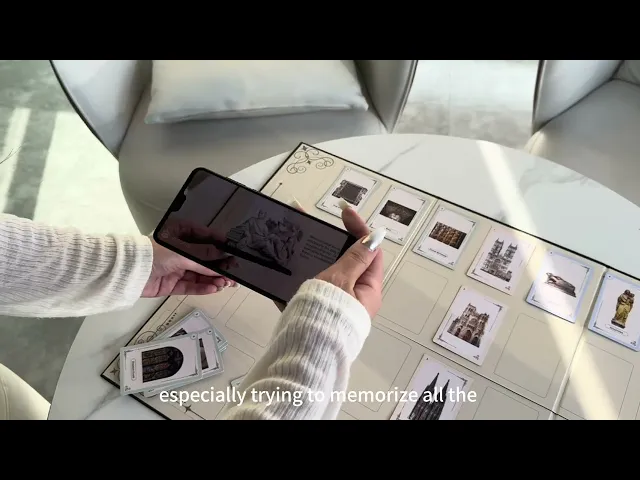
GOTHIC MEMORY is an innovative educational tool designed to engage students in the history of architectural art, particularly Gothic churches. It features four renowned churches, each with a detailed art deck highlighting key elements like sculptures and motifs. Students interact through game mechanics and use augmented reality (AR) to scan cards, viewing 2D animations of the details.
This engaging approach enhances retention of historical content and makes learning enjoyable. Through this project, I aim to transform art history education, helping students appreciate the deeper significance of architecture through interaction.
Heavy
Insufficient Visual Materials
Introduction
Current art history book design
Students attitude about art history class
Primary research


The poor quality of images in textbooks does not effectively stimulate students' interest in learning, resulting in students feeling bored with the content.
Complexity
Many art history textbooks use academic language and loosely structured content, making it difficult for students to understand. And you have to review 1,000 pages of the book for final revision.
Secondary Research
Students who lack interest or background knowledge in art history may find the course content boring or difficult to understand; studying art history requires a great deal of intellectual memorisation of artworks from a variety of periods and styles, which can be challenging for many students.
1.
2.
3.
Teachers‘ teaching methods have a great impact on students’ attitudes. Lively and interesting teaching, field trips, interactive discussions and the use of multimedia resources tend to stimulate students' interest.
Some students are concerned about the practicality of the course and may question the relevance of art history to other disciplines or careers.
Insight
Design Concept
Game Flow
Satisfaction with current teaching materials
Focus area for teaching tools
Students’ demand points for teaching tools
Satisfied
Dissatisfied
Traditional Materials
AR Elements
Video Content
Game Mechanics
Encouraging Nature
Engaging and interesting
Clear Explanation
Design Approach
This project reframes architectural history as an interactive experience. By combining AR visualization with game mechanics, it shifts learning from passive memorization to active discovery and collaborative engagement.
Player A and Player B place the main Church 1 card in its designated place on the game board. Each player chooses the card they think belongs to Church 1 from their 20 detail cards.
Player A and Player B each look at their detail cards and try to recall the architectural details of Church 1. If they can remember the detail, they can place it directly next to Church 1.
During the process, if a player is unable to remember which church a detail card corresponds to, they have the option of using the AR scanning feature. After scanning a detail card, a 2D collage animation of that detail will be displayed on the phone's screen to help them recall and confirm if the card belongs to a church1.
When both Player A and Player B have finished placing the detail cards they think belong to Church 1, the system checks their choices. If the detail cards match correctly, the players receive points; if incorrect, their chances are reduced.
After completing Church 1, proceed through the process of Church 2, Church 3 and Church 4 in turn until all the church detail cards have been matched.
Step1
Step2
Step3
Step4
Step5


Preparation Phase
1
2
3
4

Selection of detail cards
1
2
3
4
Use AR Hints
(one chance per level)
1
2
3
4

1
2
3
4
Complete Church 1
1
2
3
4
Continue the game


Card Design
Westminster Cathedral
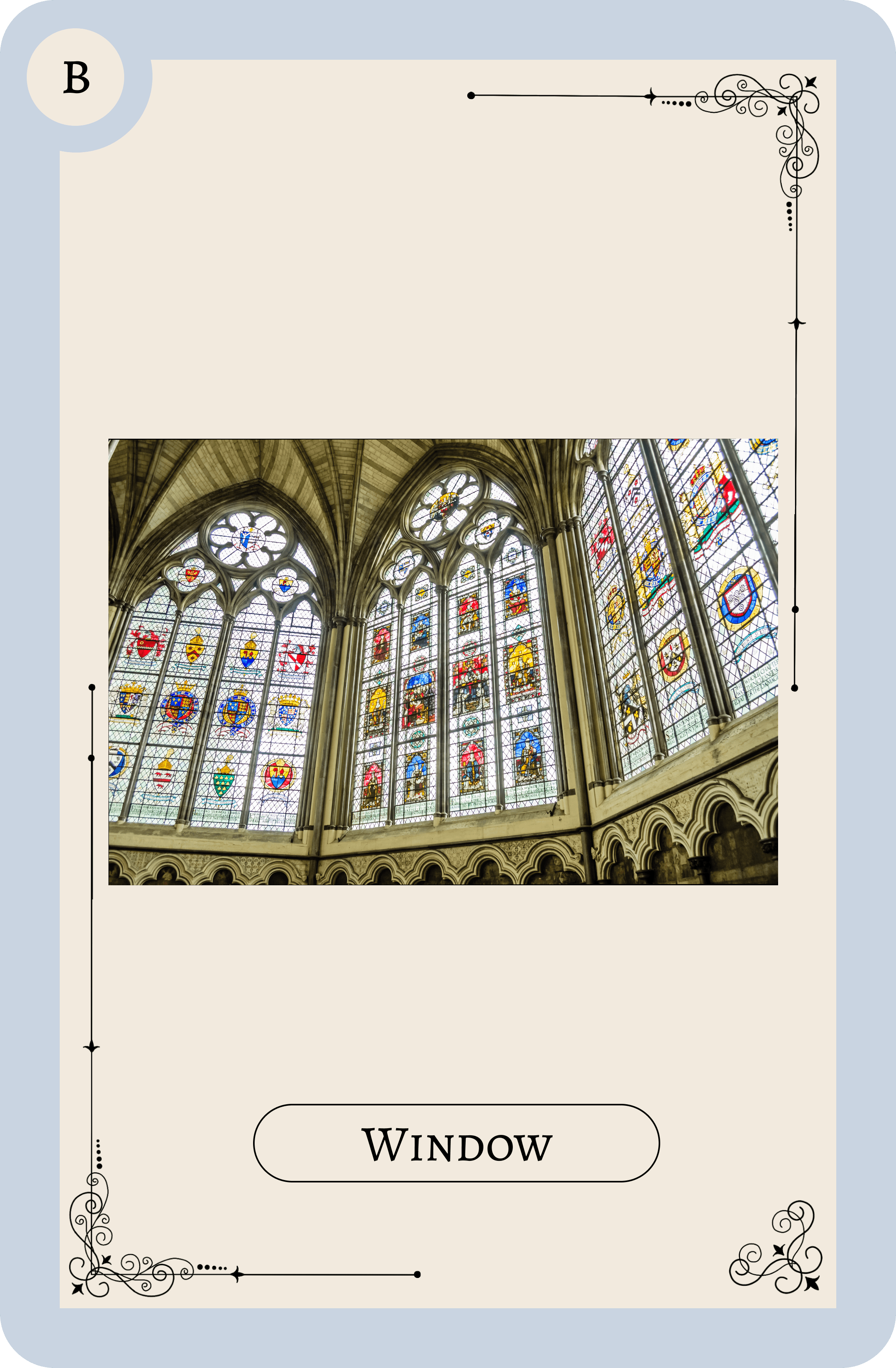
Showcases the pointed arches and rose windows of English Gothic architecture.


Cologne Cathedral

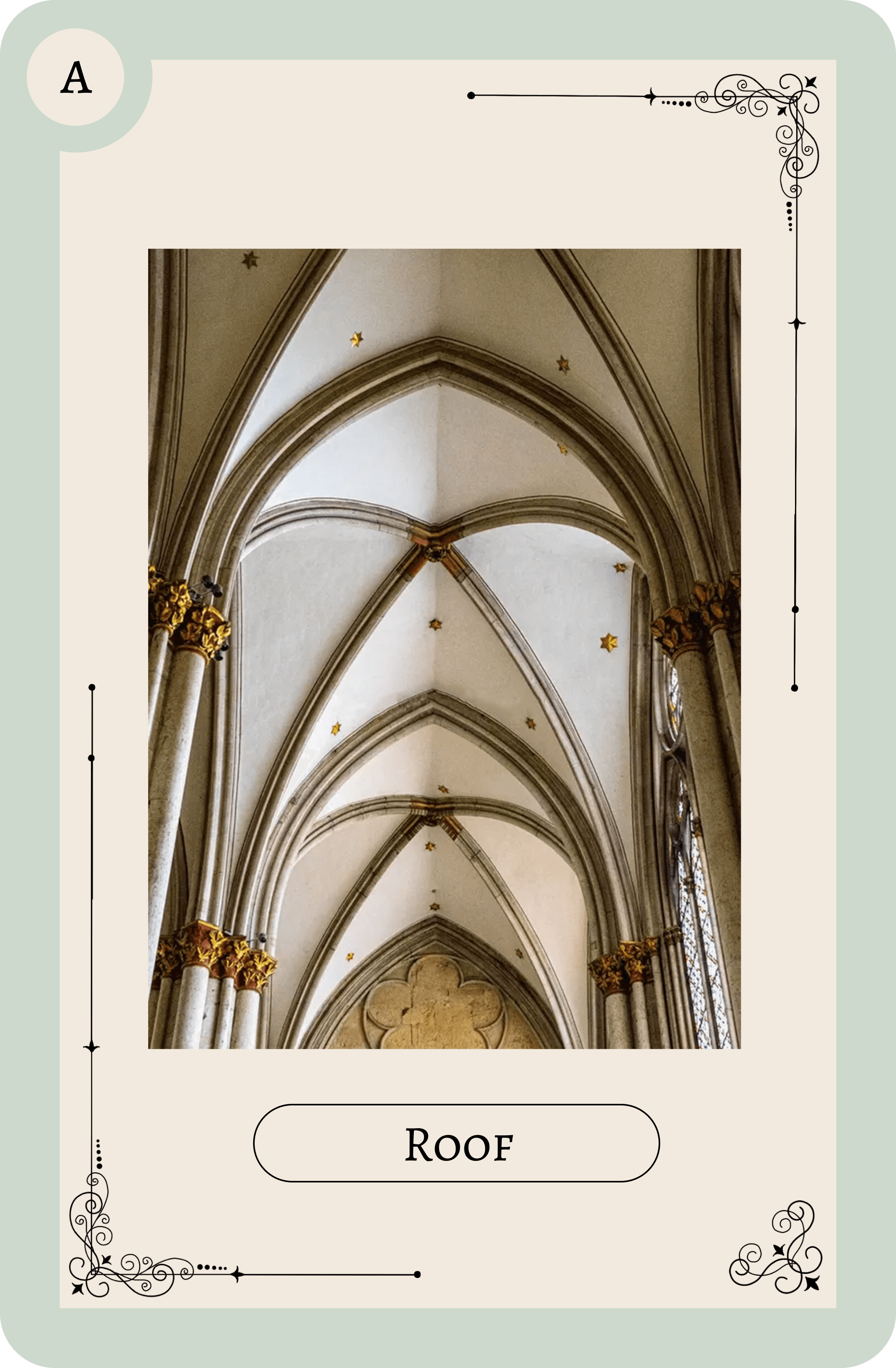


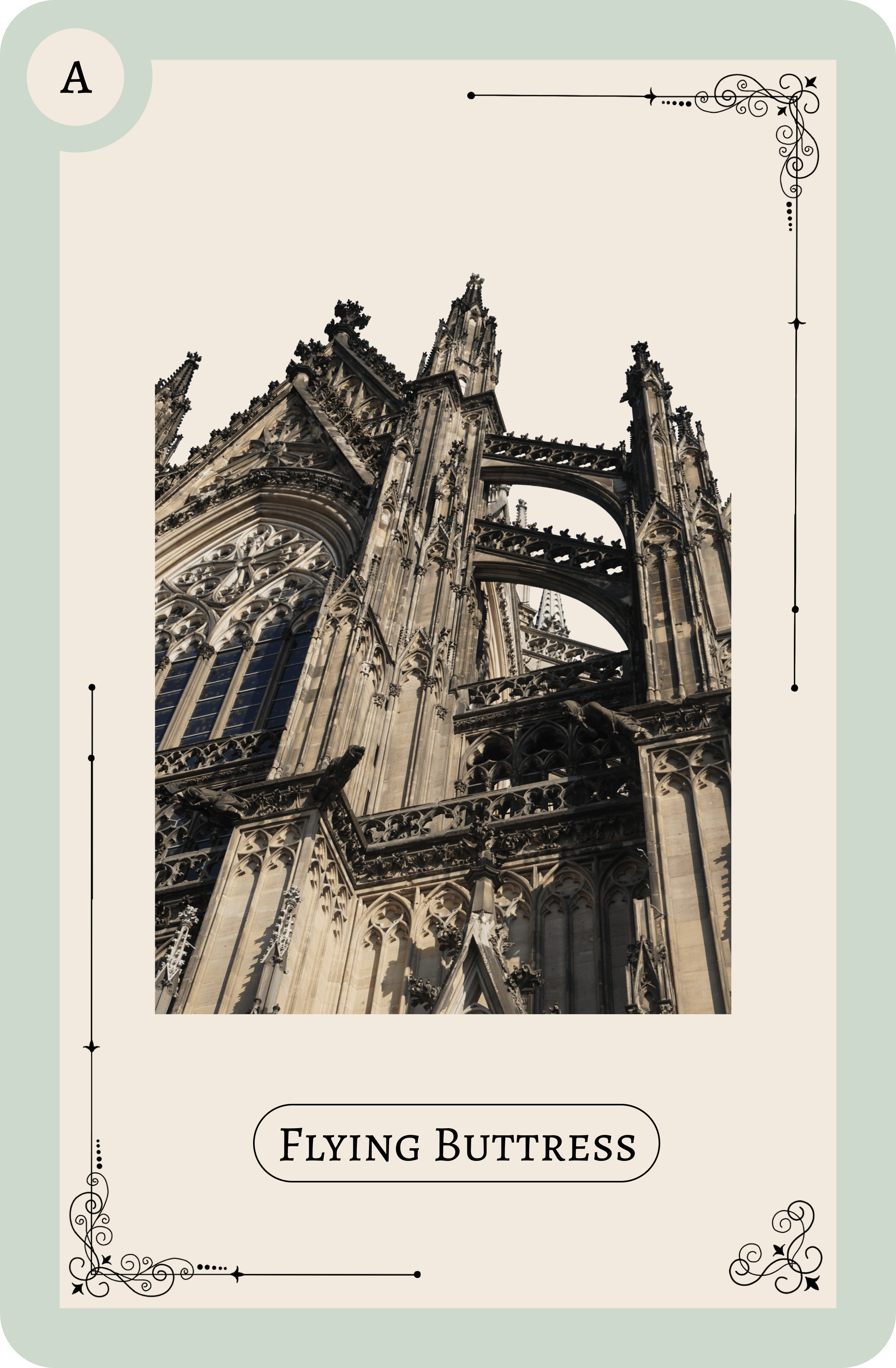


Highlights the use of flying buttresses and stained glass, demonstrating the characteristics of German Gothic architecture.
Amiens Cathedral


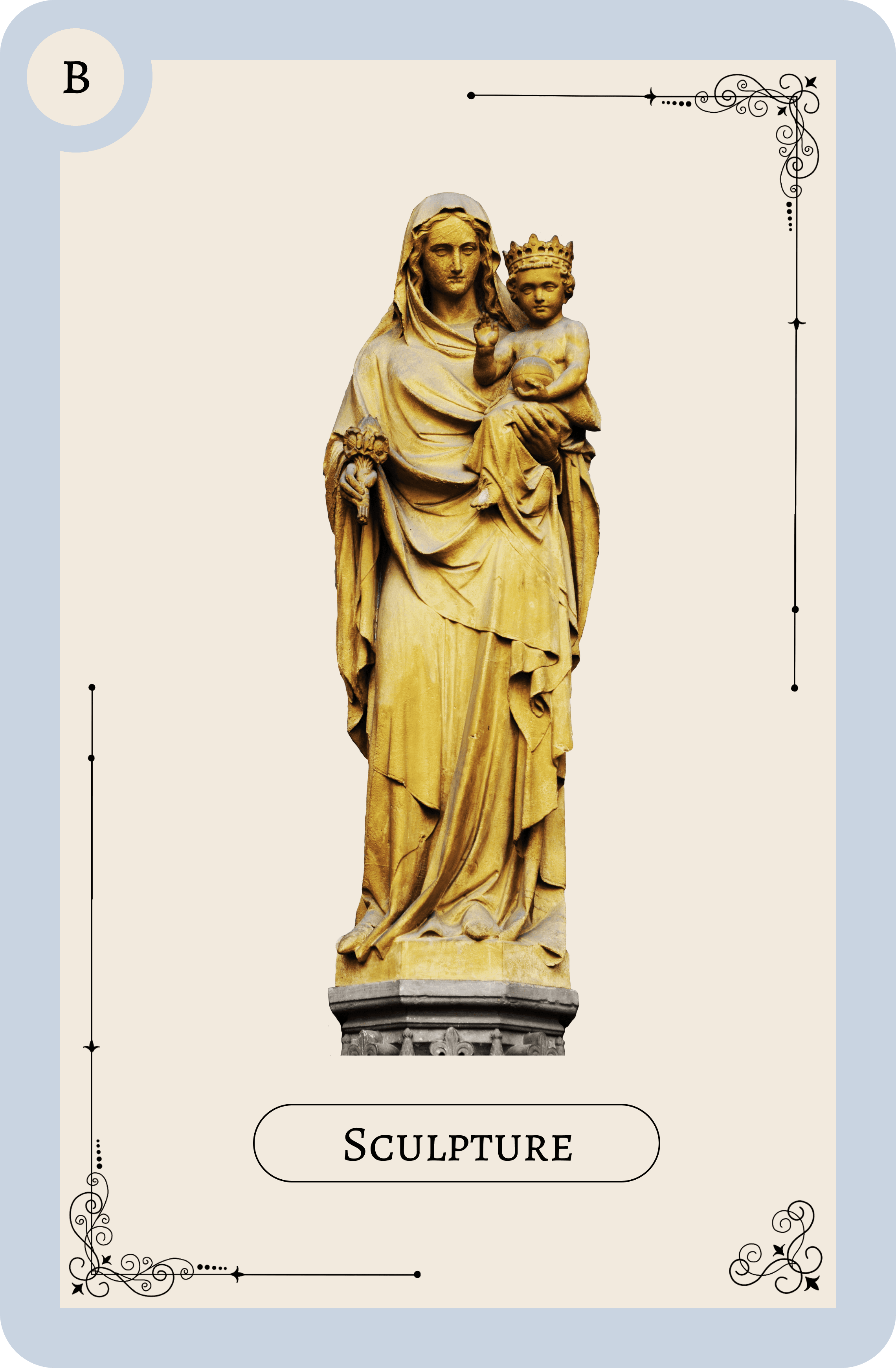
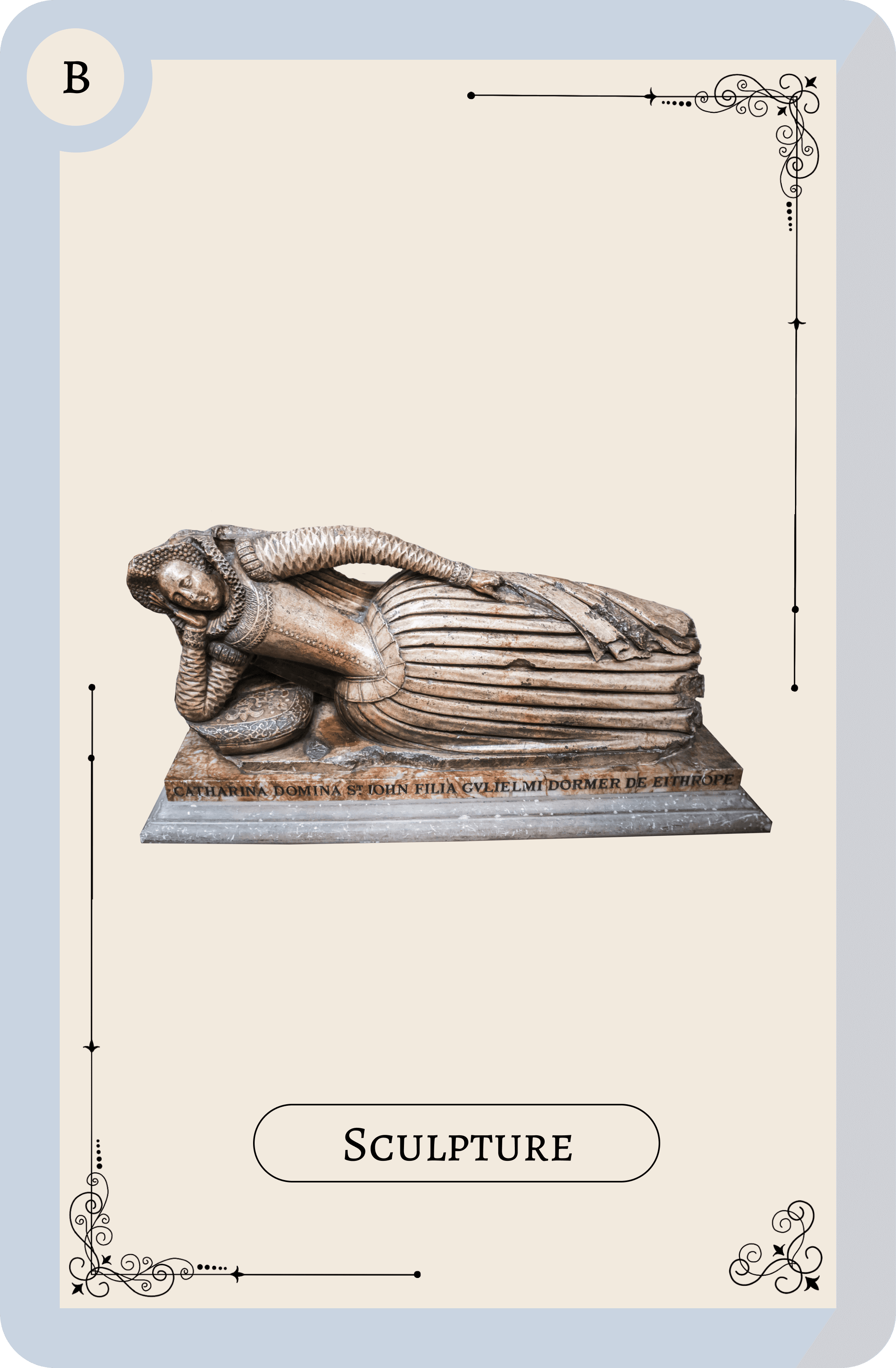
Dominated by sculpture and intricate roof structure, reflecting the grandeur of French Gothic architecture.
Milan Cathedral


Showcases the pointed arches and rose windows of English Gothic architecture.
Package Design
Game Board
Final Outcome


